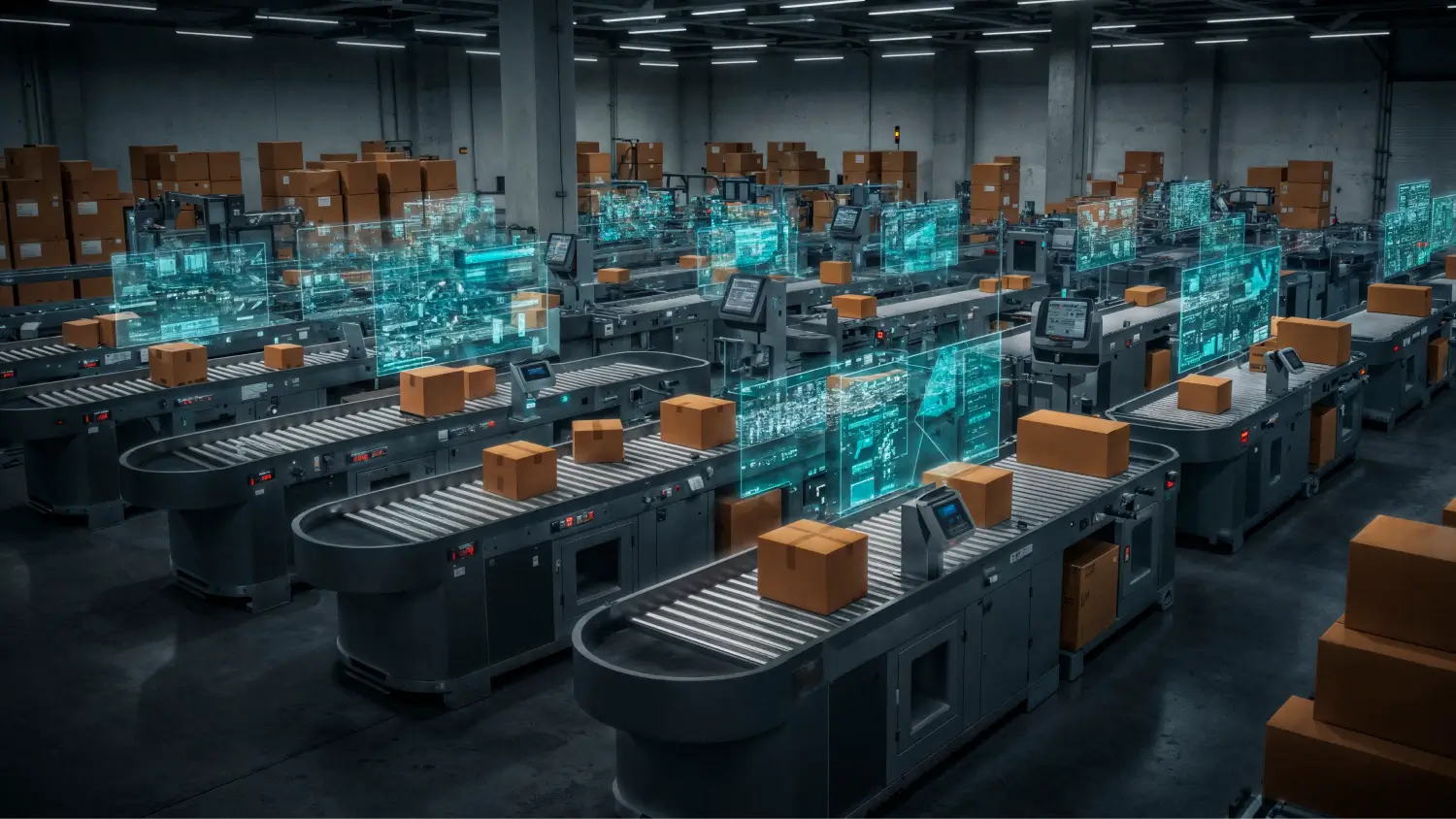


When global trade became unpredictable, the formula of “lowest cost lane + single hub” no longer held up. For our high-tech manufacturer of telecommunication and precision components, the supply-chain playbook had to be rewritten.
The company had long operated with a streamlined Asian production hub, feeding global markets through established entry ports and national distribution centres (DCs). But as tariff regimes hardened and geopolitical risk rose, it became clear: efficiency alone wasn’t enough. Agility, resilience, and strategic flexibility had to take the front stage.
The leadership set a bold direction: build a supply and distribution base that can shift with the market — without giving up cost or service quality.
To make that vision concrete, they engaged Sophus to drive the network redesign across two core scenarios: the selection of a supply centre location for Latin America, and the restructuring of the European DC footprint.
The Challenge: When Stability and Efficiency becomes the Weak Link
In recent years, A series of external shifts exposed the fragility of its supply chain:
- Tariff hikes and trade tensions squeezed margins
- Rising regulatory controls and export restrictions increased clearance delays and inventory risk.
- Customer expectations shifted: faster service, broader product sets, more regional responsiveness.
- A single-hub design became a single-point vulnerability: if the hub or trade route was interrupted, the ripple effect was immediate.
One senior executive framed it:
“We used to optimize for cost. Now we have to optimize for continuity.”
The company realised the imperative was two-fold:
- Geopolitical risk required agility — the network had to pivot fast if policies changed or disruption occurred.
- The distribution base needed to be more nimble — not just in transport cost, but in how quickly it could adapt to regional demand shifts, regulation changes, and custom clearance.
The Approach: Building A Living Network Model with Sophus
The project kicked off with Sophus building a supply chain digital twin of the existing network: factories, ports, DCs, routes, lead-times, duties, tariffs, and service commitments. That baseline revealed the hidden cost of rigidity.
From that foundation, the team targeted two major redesign questions:
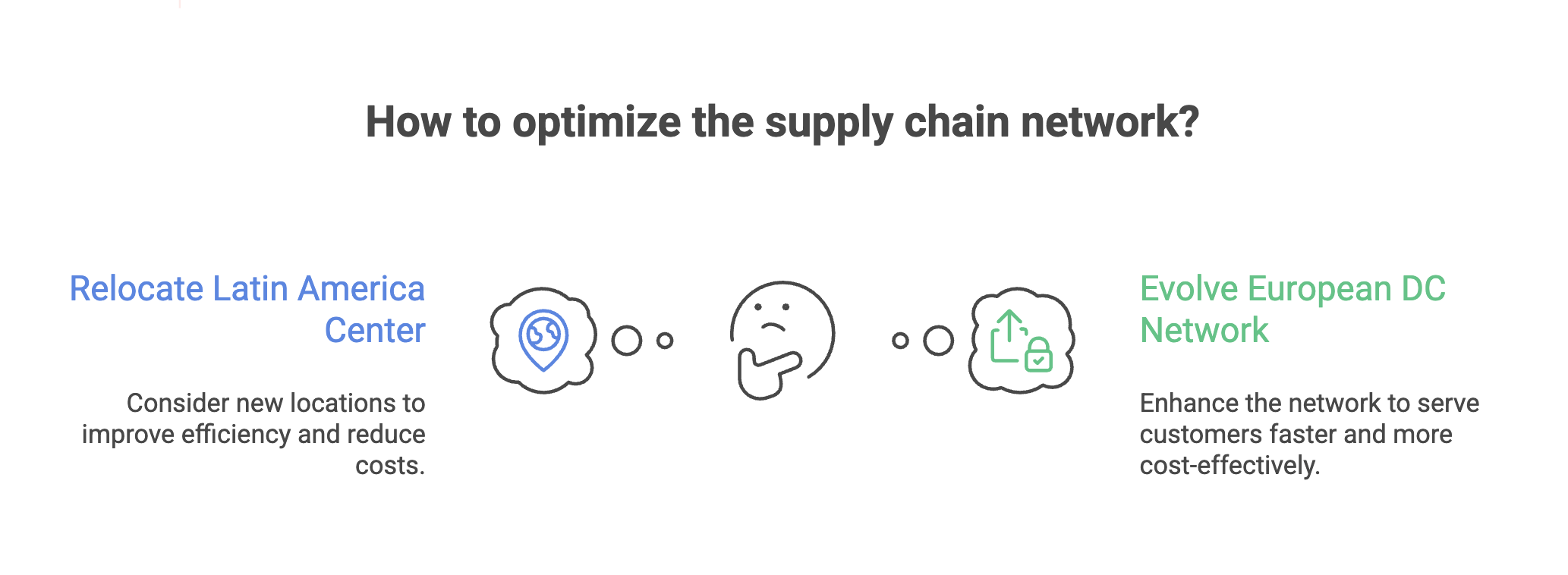
- Scenario 1: Should they relocate the Latin America supply center? Where should it go?
- Scenario 2: How should the European DC network evolve to serve customers faster and more cost-effectively?
For each scenario, Sophus layered in cost, lead-time, location, regulation, duty/tariff exposure and risk factors — enabling the company to compare alternatives not purely on freight cost but on:
Total landed cost + flexibility + resilience.
Scenario 1: Rethinking the Latin America Supply Base
Latin America was growing fast. The company’s exports flowed via Mexico, which had served well for years. But as tariffs mounted, it made sense to ask: Is it still the right answer?
Using Sophus, the team ran multiple scenarios including: Mexico only; Panama only; and a dual-hub strategy Mexico + Panama.
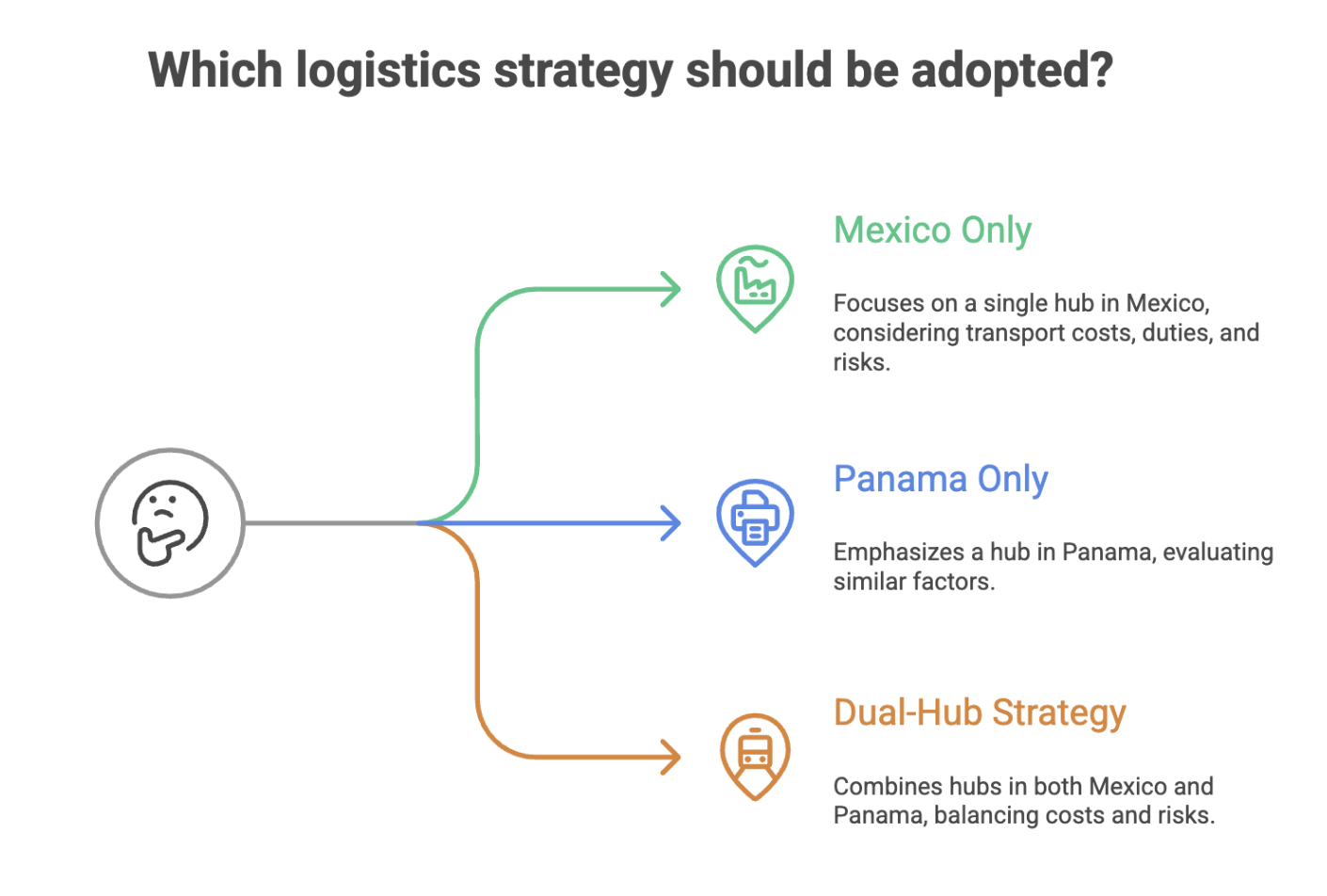
Each scenario incorporated:
- Transport cost from factory to hub
- Import duties and tariffs for key components
- Customs lead-time variability and clearance risk
- Regional reach to customers and delivery time targets
- Macroeconomic, labour and infrastructure risk for each country
The results were compelling:
- A dual-hub Mexico + Panama model delivered the lowest total landed cost and best service coverage (over 96 % of orders delivered within target lead-time).
- The Panama hub offered strong logistical connectivity, favourable duty frameworks and a stable policy environment — crucial for future-proofing.
- Importantly, the dual-hub option provided operational redundancy, reducing the network’s exposure to geopolitical disruption.
Scenario 2: European DC Network – Faster, Smarter, More Balanced
With the Latin America redesign underway, focus shifted to Europe — a region where customers demand high availability and speed. The company’s legacy network had multiple national DCs, each optimized locally but collectively creating duplication, uneven inventory coverage and rising cost.
The objective: build a DC network that could deliver faster (ideally one-day service to major markets), reduce cost, and be resilient against customs/regulation shocks. Sophus modelled several frameworks:
- A centralised model: single large European DC
- A decentralised model: several country-level DCs
- A hybrid model: a few regional hubs plus local satellite depots
Key evaluation metrics included: transport cost, inventory cost, service lead-time, customs/duty exposure, and port access flexibility.
The modelling showed:
- A hybrid model offered the best balance: significant cost savings (around a 5–6% reduction) while still achieving one-day delivery for 90 % of core customers.
The model became repeatable: the company could test new geographies, products or service commitments using the same framework.
The redesign shifted the mindset of the team greatly: DCs weren’t just fixed cost centres — they were flexible nodes in a network that could adjust as demand, regulation or trade policy shifted.
Building Resiliency
By pursuing both scenarios, the company achieved meaningful outcomes:
- Overall logistics cost was reduced by approximately 5-6% across the redesigned regions.
- Customer service improved – faster regional delivery, more predictable clearing times, lower duty risk.
- The network acquired built-in agility — if a port slows or a sourcing zone is disrupted, the company can reroute via alternate hubs or adjust DC assignments.
- The internal capability matured — the company now has a strategic model they can reuse for new product lines, geographies, or trade-policy shifts.
One executive summarised it neatly:
“The real value isn’t just cost saved. It’s the option we now have.”
Wrap Up
In today’s world, agility and resilience matter as much as cost.
When trade policies shift, tariffs rise, or geopolitical events intervene, a static network becomes a liability. The new frontier is a supply-chain network that can reconfigure quickly — shifting hubs, routes and DCs with minimal friction.
By working with Sophus, the company could quickly build out its digital twin of the supply chain network, and dynamically update and optimize the network setup.