


According to Gartner, network design is the optimization of the function and location of supply, distribution, and manufacturing networks in support of customer requirements and an overarching company strategy. Supply chain network design software supports the creation of network models with the application of analytics to identify the best supply chain design in a scalable, structured, and repeatable way.
These tools support the determination of recommendations about the supply chain network structure. It includes decisions about facility size and locations, modes, and transport lanes in the end-to-end supply chain. The scale of the changes being evaluated varies from small modifications, such as changing a mode of transport or swapping transportation lanes, to large-scale changes that involve opening/closing/repurposing several facilities in the network and the associated knock-on impacts.
Unlike what a manual process allows, the use of supply chain network design software to support the decision-making procedure allows companies to review more potential network configurations, supporting a complete, data-driven decision-making process. These decisions are mostly made in tactical and strategic time frames.
To help you with the same, this article lists the top 5 supply chain network design software.
Go through it to grab the details of each tool, decide, and get started with the best tool at the earliest.
Sophus X
Sophus X is one of the most scalable and efficient supply chain network design tools in the market. It’s based on top-notch database technologies and mathematical languages, ensuring accurate numbers, and ultimately, guiding you through an effective design of your supply chains.
Have a look at the benefits and features Sophus X offers:
-
- Comprehensive and easy-to-use data validation: The model runs automatic data validation in seconds when importing/uploading data.
-
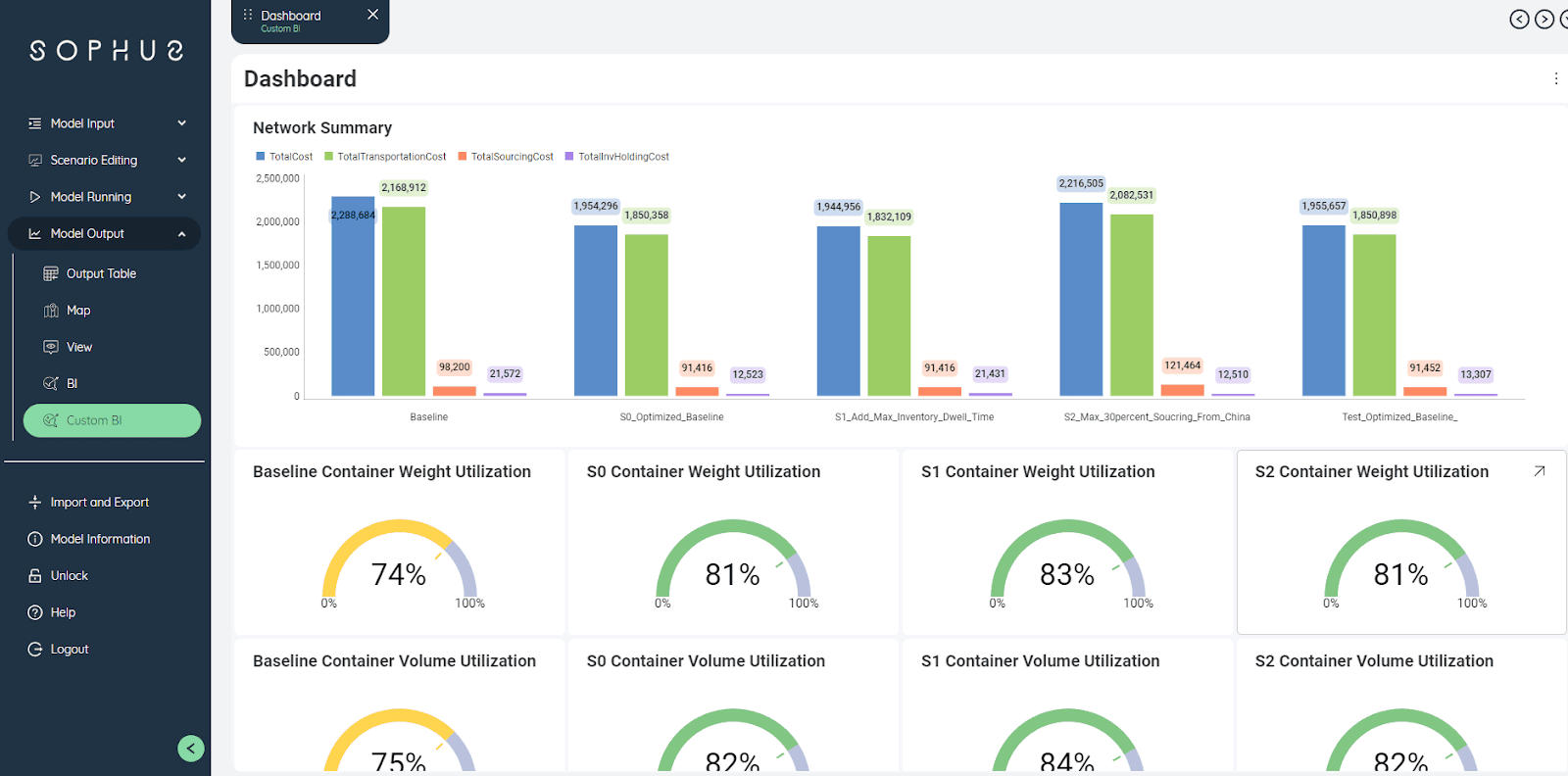
- Intuitive and super-fast UI
-
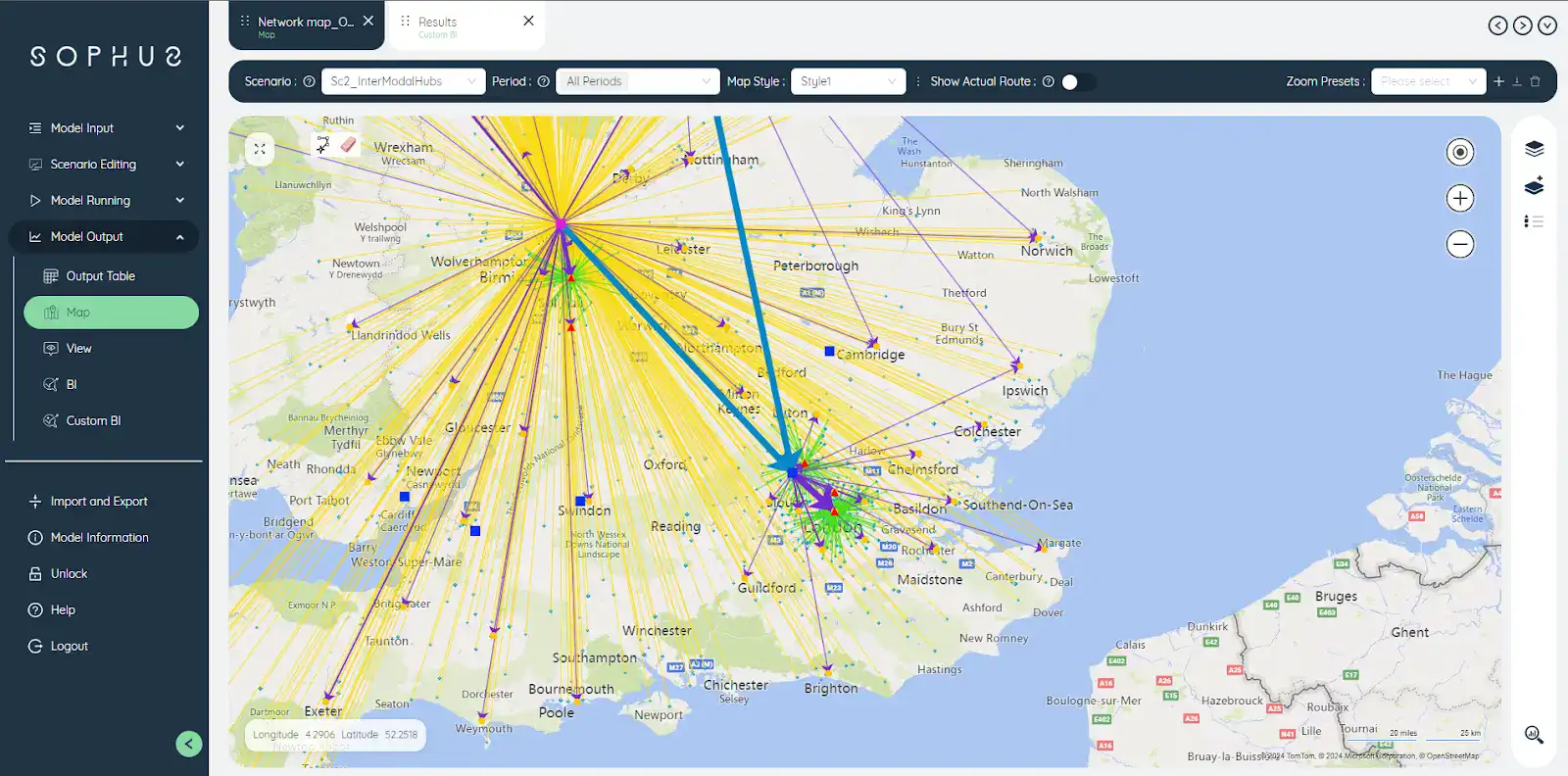
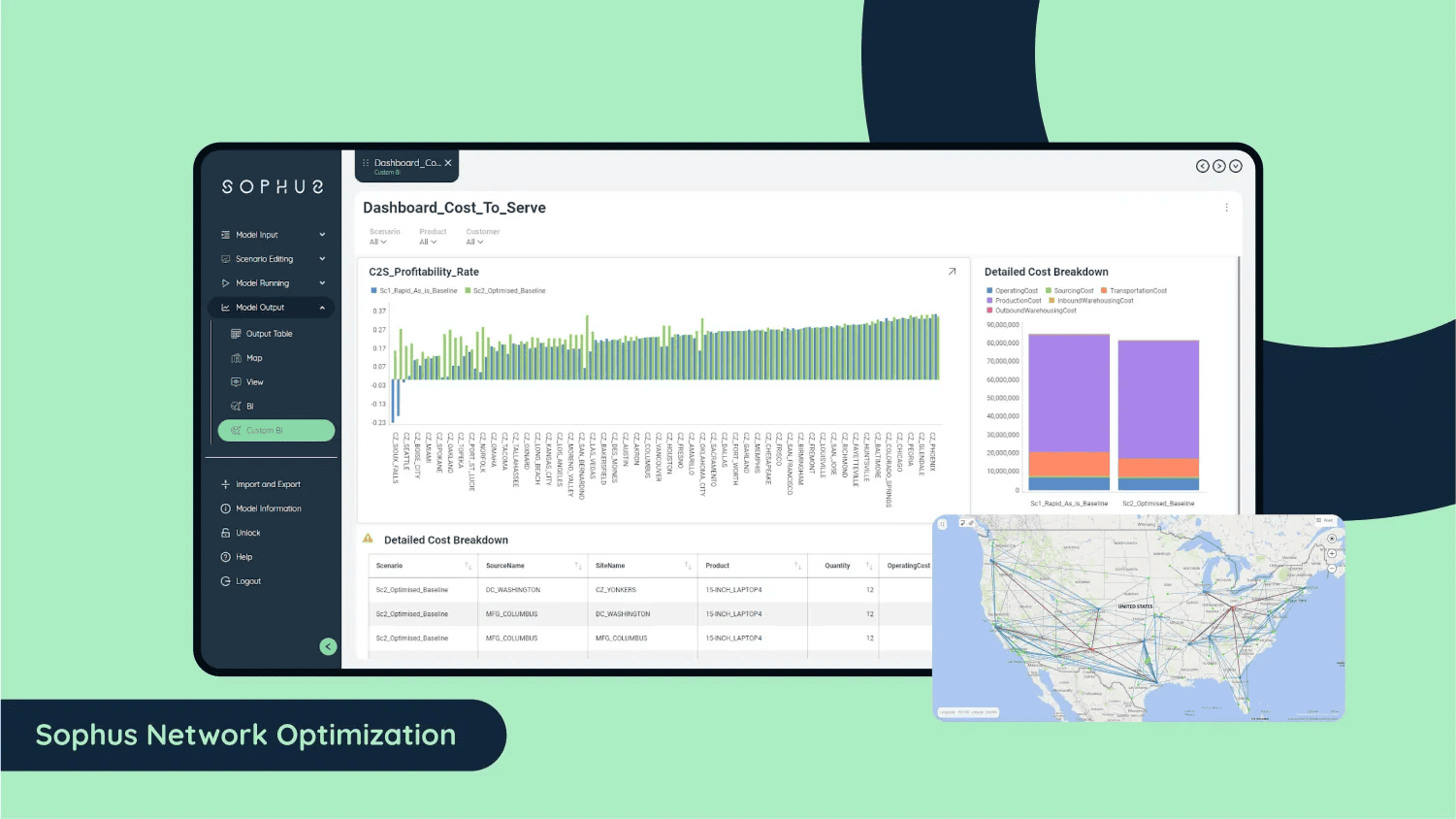
- Custom BI Generation within the tool
-
- Fully embedded ETL integration ETL Data Processing.
-
- Rapid baselining – build a model of ‘As-Is’ in days not weeks.
-
- Model carbon costs through a supply chain.
-
- Identify the best locations for facilities based on multiple factors by using the Greenfield site selection feature.
-
- Design the optimal network to distribute spare parts by leveraging the Aftermarket Spare Parts Network Design model.
-
- Plan the distribution network structure to reduce costs and improve efficiency.
-
- Let the supply chains of merged or acquired entities fit together by using the Mergers & Acquisitions (M&A).
-
- Design supply chains that integrate various sales channels smoothly through the Omni-Channel Supply Chain Network Design feature.
-
- Optimize the inventory level across your supply chain network through an inventory optimization solution.
-
- Plan detailed transportation routes once you fix your supply chain network.
-
- Develop a model for triggering product replenishment at the DCs based on predefined minimum/maximum Days of Supply (DOS) levels.
What Makes Sophus X a Great Choice?
-
- Speed: SophusX runs up to 20 times faster than similar competing solutions. This would truly save a great deal of time for the company as well as the users of the software
-
- Easy to use: The user interface of SophusX has been designed with the goal for the most intuitive to use, and for Supply Chain Design professionals it would take minimal effort to get hands-on with the tool.
-
- Efficiency: Apart from faster speed, Sophus has been designed to improve the user’s efficiency by 3X, and 4X, by adding features such as rapid baseline, automatic data validation, free of infeasibility diagnosis,
-
- And many more. For a user, saves a great deal of time so users can spend their time on more valuable things. For a company, this means unlocking more business benefits and returns.